

Maximise Your Yacht Investment: Understanding Yacht Sales Tax
How to Save on Tax with Yacht Ownership:- It has been said that the only things inevitable in life are death and taxes. Yacht ownership normally involves some large numbers, and even at relatively small percentages of those large numbers the taxes and fees demanded by local, state, and federal governments can add up quickly. Fortunately, like other forms of taxation, there are ways in which a yacht owner can comply with the law while still reducing the amount paid to the tax collector.
There’s some good news. A variety of entirely purchase and ownership strategies can make an enormous difference in the overall cost of acquiring and owning a yacht. Read on to find out if you could potentially save on taxes when purchasing a yacht.
Save Big with Tax Exemptions on Greenline Hybrid Yachts
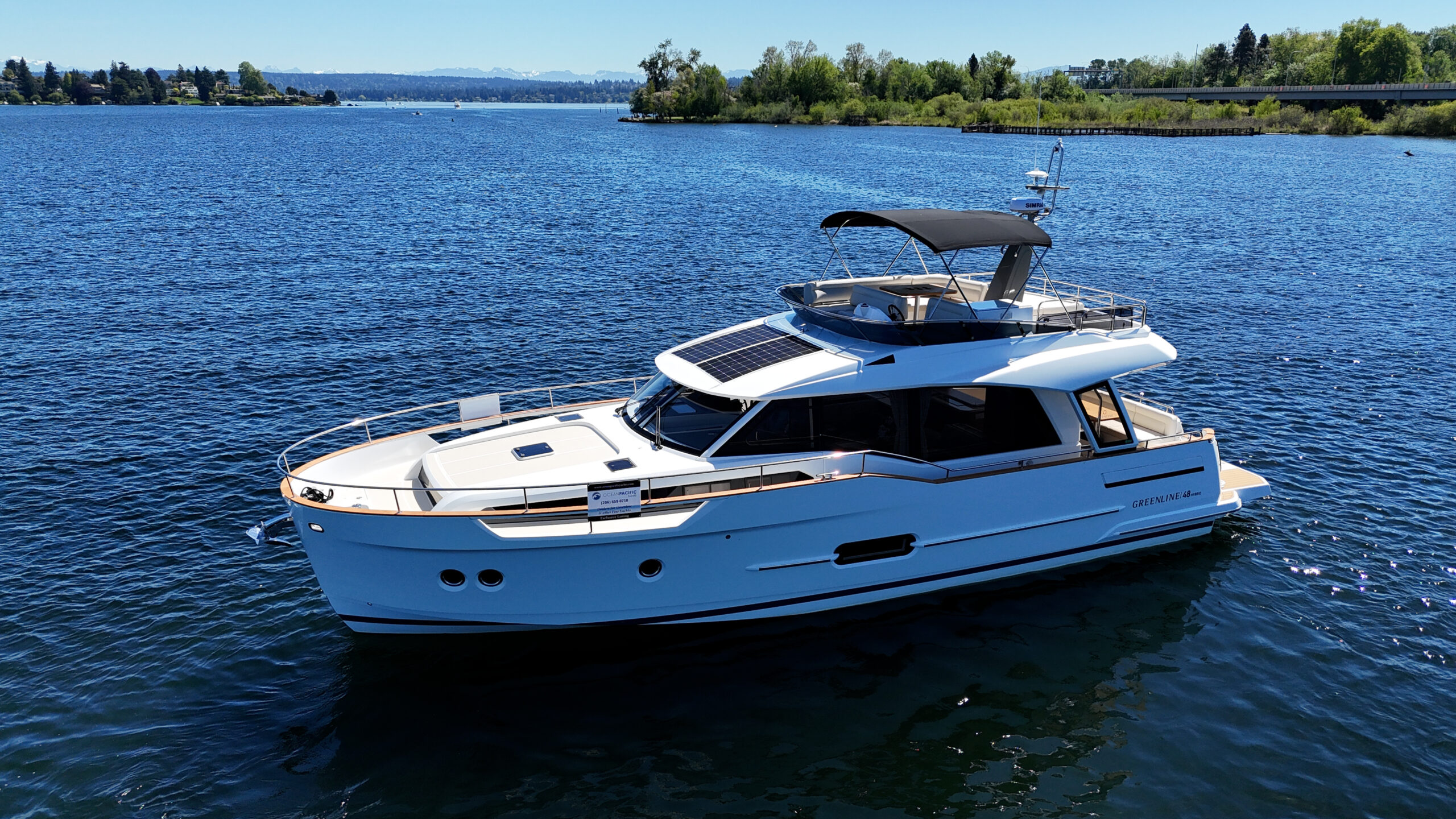
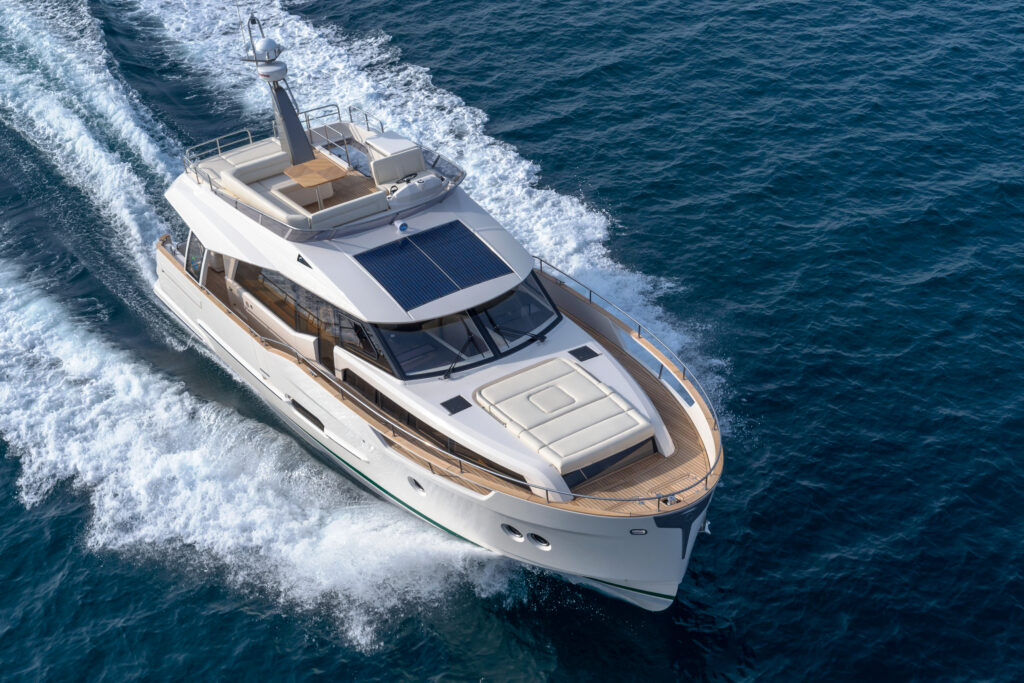
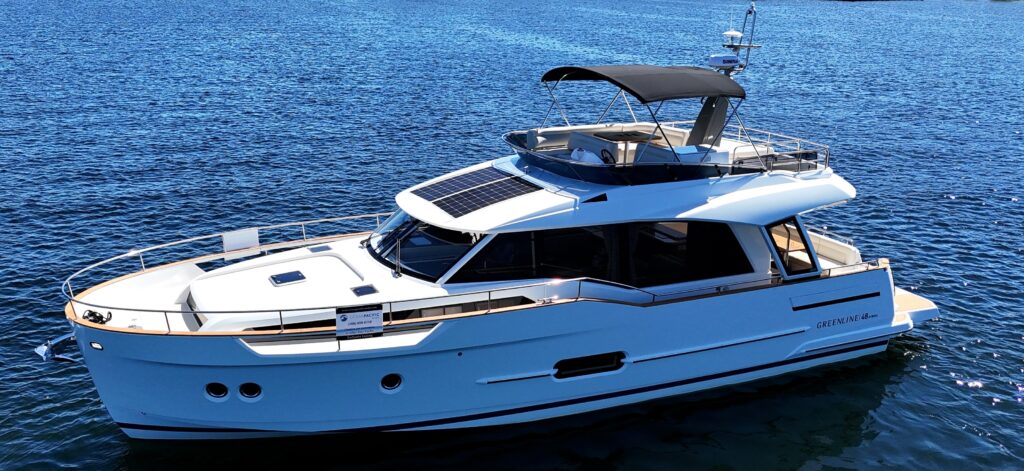
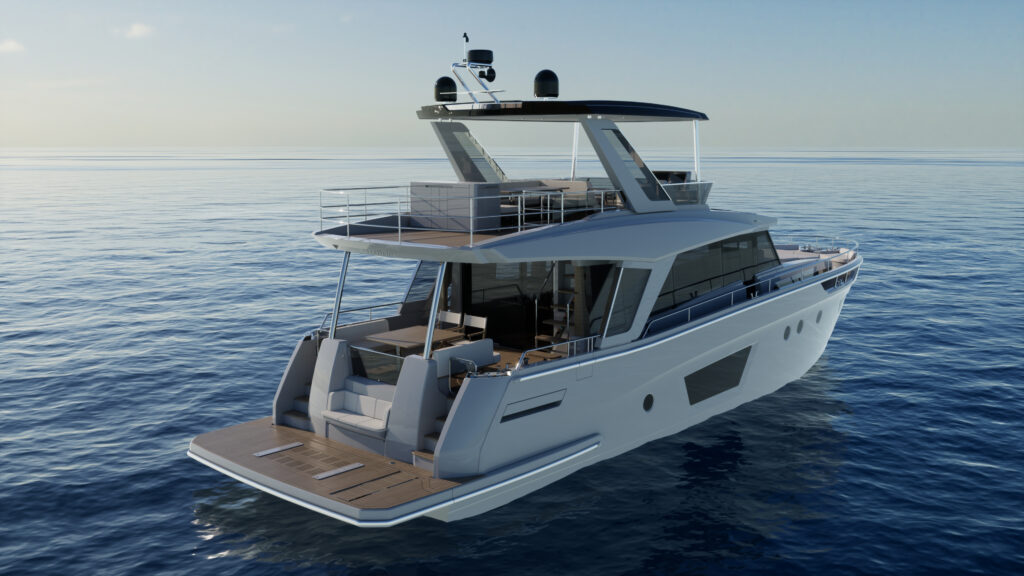
Did you know that purchasing a new Greenline Hybrid Powered Yacht in certain states can exempt you from hefty sales taxes?
One of the first tax situations usually encountered by the owner of a yacht is state and local sales tax. There’s some good news on this front. The state of Washington, for example, collects no sales tax when the purchaser chooses a new, hybrid-powered yacht (such as one of the Greenline Hybrid Yachts). This entirely legal tax exemption would save a buyer roughly 10.35% of the retail transaction price- amounting to more than $50,000 to possibly over $150,000. It might be worth checking for similar exemptions in other states.

Unlock Tax Savings with Yacht Trade-Ins
Thinking of upgrading your yacht? Your existing vessel can lead to significant tax savings, potentially reducing your tax bill by thousands of dollars.
Normally a fixed percentage of the selling price of the merchandise, some taxing authorities will tax a lesser amount if the buyer’s previous vessel is accepted as a “trade-in.” A $300,000 trade-in on a more costly vessel can result in tax savings of $30,000 or more, depending on the local sales tax rate.
State Yacht Registration: The Key to Managing Sales Tax
Where you register your yacht matters. Understand how state sales tax and use tax work, and how the right registration choice can save you money.
Sales tax is determined by the state in which the yacht will be registered, and that’s determined by where the yacht is stored when not in use. Simply deciding to do business in one of the very few states that doesn’t collect a sales tax won’t normally save a yacht buyer any money; unless they also happen to be a legal resident of that state and the vessel will be moored there.
When the yacht, purchased elsewhere, is registered in a sales tax state the state of registration is entitled to collect “use tax”. Use tax which is typically at a rate equivalent to sales tax. In cases where the state of purchase had a sales tax, but the rate was lower than the state of registration, the state of registration will normally collect use tax on the difference between the two rates. If a yacht buyer paid a 7% sales tax of $70,000 at the time of purchase and then registered the yacht in a state with a 10% sales tax, the state of registration would assess an additional $30,000 tax.

Canadian Yacht Buyers: How to Legally Avoid the 25% Luxury Tax
Canadian yacht buyers face a steep luxury tax, but there are legal ways to avoid it.
In addition to general sales tax, some taxing authorities impose a “luxury tax”. In Canada, this tax can be as high as 25% of the purchase price. Most Canadians live within 100 miles of the Canadian/ US border- and many Canadians avoid luxury tax by purchasing and registering a boat in the United States. In some cases, such as a Canadian resident purchasing a Greenline Hybrid Yacht in the state and docking it in a US marina, there will be no sales or luxury tax paid to either Canada or Washington state.
Chartering Your Yacht
Chartering your yacht can defer sales tax, but it comes with certain restrictions. Explore whether this tax-saving strategy is right for you.
A yacht purchased for charter purposes is not subject to sales tax at the time of purchase. Some restrictions make this option less attractive for most yacht owners. Those begin with the fact that owners cannot make personal use of the vessel without paying a “use tax” based on the fair market value of the time the owner is aboard. If a yacht typically charters for $1500 per day, the owner will be liable for sales tax calculated on $1500 for every day they spend aboard.
Charter income can be subject to a variety of business and occupation taxes, in addition to sales tax, yacht owners will be expected to file regular reports (often quarterly) and submit payments. Most yacht owners desiring to have their boat in charter use a professional charter company for the complicated processes of keeping records and managing the boat. One common sales tax strategy for yacht owners interested in producing charter income is to establish an LLC and lease the vessel to the LLC. The yacht owner is still liable for the taxes due on the value of each day’s use under this arrangement.

Why Greenline Hybrid Yachts Offer Exceptional Sales Tax Benefits
Hybrid yachts like Greenline’s Hybrid Power Yachts offer not just eco-friendly cruising but also significant tax advantages.
Hybrid yachts, which have both electric and diesel systems for propulsion, are exempt from sales tax in a variety of states. In those states, a person contemplating the purchase of a new yacht could save enough sales tax to more than offset the additional cost (if any) of choosing a hybrid yacht vs. a diesel-only alternative.
Greenline yachts are the world’s most popular choice of all available hybrid yachts having built over 850 yachts since 2008. In situations where a purchaser chooses a new hybrid yacht, such as a Greenline Hybrid Powered Yachts, and avoids paying sales tax at the time of purchase, additionally choosing to make that purchase by organizing an LLC can convert a customary tax liability into a resale advantage. Upon resale, a subsequent buyer can purchase the ownership shares in the LLC and acquire the assets, (the yacht). Neither the original LLC purchaser nor any subsequent purchasers will pay sales tax as long as the transaction is the sale of shares in the LLC. This provision potentially frees up some additional cash which the subsequent buyer can justify including in the price when offering to purchase.


Property and Excise Tax: What You Need to Know About Ongoing Yacht Costs
Owning a yacht isn’t just about the initial purchase. Dive into the ongoing property and excise taxes that yacht owners need to budget for.
Not only are a variety of tax authorities involved in the initial purchase of a yacht, but the tax collectors will also continuously have their hands out for the duration of ownership. One of the most persistent examples of on-going taxation is a tax on the ownership of property. In some states, this is called a property tax- while in other states the practice of taxing the ownership of property is known as “excise tax.”
Ownership taxes are typically calculated as small percentages of the state’s estimate of the market value of a yacht. States establish depreciation schedules by which the value subject to taxation normally drops, even if only slightly, each year. It’s common for larger vessels to hold and transfer ownership through US Coast Guard Documentation rather than state-issued titles. No state is allowed to issue a title for a yacht that has a US Coast Guard Document- but nearly every state will require an annual registration fee for any vessel whether held by either ownership device. It’s customary practice to collect the state property or excise tax at the time the annual registration is renewed.
Some states have a fixed amount that all boats pay upon registration, without regard to the value of the boat. Such registration fees are commonly under $100. Other states use a complex formula to estimate the value of a specific make, year, and model of yacht and assess the tax based on that amount. In states using value as a basis for excise tax, the annual “tabs” are typically at least a few hundred dollars and can escalate into the thousands on a large and luxurious yacht.
Strategies to Minimize Yacht Property and Excise Taxes
Avoiding property and excise taxes may be difficult, but strategic planning can minimize their impact.
There are very few practical ways to avoid excise or property taxes. Owners of commercial vessels and sometimes mega-yachts will fly a “flag of convenience” and register through the Cayman Islands or elsewhere, but much of that is motivated by a desire to avoid various minimum wage requirements and payroll taxes that would apply if the vessel were registered in the United States.
The” flag of convenience” has its own tax implications. If an individual owns a yacht flagged for convenience and that individual dies while the vessel is in US waters, the government can charge the estate about 40% of the yacht’s value.
Yacht owners should seek professional legal and financial advice before using a flag of convenience
Avoid Costly Penalties: The Risks of Misleading Yacht Registrations
Tempted to register your yacht in a tax-friendly state? Understand the legal risks and financial penalties of misleading yacht registrations.
In some cases where an owner’s state of residence adjoins a state with a much lower sales tax or excise tax rate, there can be a temptation to assert false claims of residency or the home port of a yacht. This cannot be recommended. For example, Washington State has a sales tax more than 10%, while the adjoining state of Oregon funds state government with an income tax and has no sales tax. Historically, some yacht owners have tried to claim residency in Washington to avoid state income tax while registering their yacht to a sham address in Oregon to save on the initial sales tax and subsequent excise taxes.
Due to the financial values of yachts, there’s enough money in play for states to justify assigning state employees to investigate the yacht moored year-round in (for example) Seattle, Washington with a “Portland, Oregon” hailing port on the transom and an Oregon registration paper. Penalties when caught will include paying all the back taxes owed as well as punitive fines. The fines are typically substantial.
Can You Run Your Yacht as a Business? Understanding the Tax Implications
Claiming your yacht as a business can offer tax benefits, but it comes with strict IRS scrutiny.
Proclaiming a yacht as a business can create some complex tax consequences. Annual losses from the operation of a yacht-centric business, as well as an amount designated for “depreciation” of the primary asset in the business, the yacht, can in some cases, be deducted from the amount of income subject to US federal income tax. Such deductions obviously reduce the payout to the IRS each April 15.
The IRS scrutinizes very carefully claims such as “my yacht is actually a business.” IRS rules require that the business plan, structure, and intent be at least capable of generating a taxable profit-
otherwise the yacht ownership falls into the category “hobby business”. Hobby businesses cannot claim deductions for depreciation or operating losses. A faulty assertion that a private yacht is a business could easily trigger a total audit of a taxpayer’s current and recent federal income tax returns.
A yacht operated as a business will be expected to generate some income, and that income will be taxable at a variety of government levels. As with any business, a constant stream of quarterly and annual reports to various government agencies will require filing.
How Yacht Financing Can Offer Tax Deduction Benefits
Financing your yacht could provide tax deductions, potentially reducing your taxable income. Discover the requirements for leveraging this tax-saving opportunity.
Yacht owners who aren’t otherwise declaring their boat a business venture could conceivably save some money on income taxes if they are financing a portion of the purchase price. Unless a yacht buyer is already declaring a “second home” for tax purposes, IRS rules allow the amount of interest paid on loans up to $750,000 (or the first $750,000 of a larger loan) to be deducted from a taxpayer’s income before the final calculation of taxes due. The only requirement is that the yacht must be at least rudimentarily equipped to serve as a home; with sleeping space, a head, and a galley.
The Importance of Professional Tax Advice for Yacht Owners
Tax codes are complex, and often vary from state to state. Before making any decision with a large amount of tax consequences it’s imperative to consult a professional tax advisor. A professional will consider all aspects and ramifications of an individual’s circumstances to ensure that no tax savings opportunities are overlooked and that any expected tax advantage will, in each individual case, be available.
For expert legal advice on matters relating to the tax aspects of purchasing a vessel, Ocean Pacific Yachts recommends The Wenthur Law Group, LLP based in San Diego, California, their focus extends to all aspects of sales, use, VAT, and property taxes related to purchasing, owning, and selling yachts, jets, and vintage automobiles. Cris Wenthur, the senior partner at Wenthur Law Group, leads the team. Chris specializes in acquiring yachts, jets, and vintage cars as-well as income, partnership, corporate, and estate tax planning.
Disclaimer: "Ocean Pacific Yachts does not provide tax, legal or accounting advice. This material has been prepared for informational purposes only, and is not intended to provide, and should not be relied on for, tax, legal or accounting advice. You should consult your own tax, legal and accounting advisors before engaging in any transaction."
Media Contact:
Susan Bilginer – Office Manager
Ocean Pacific Yachts
206-659-0710